
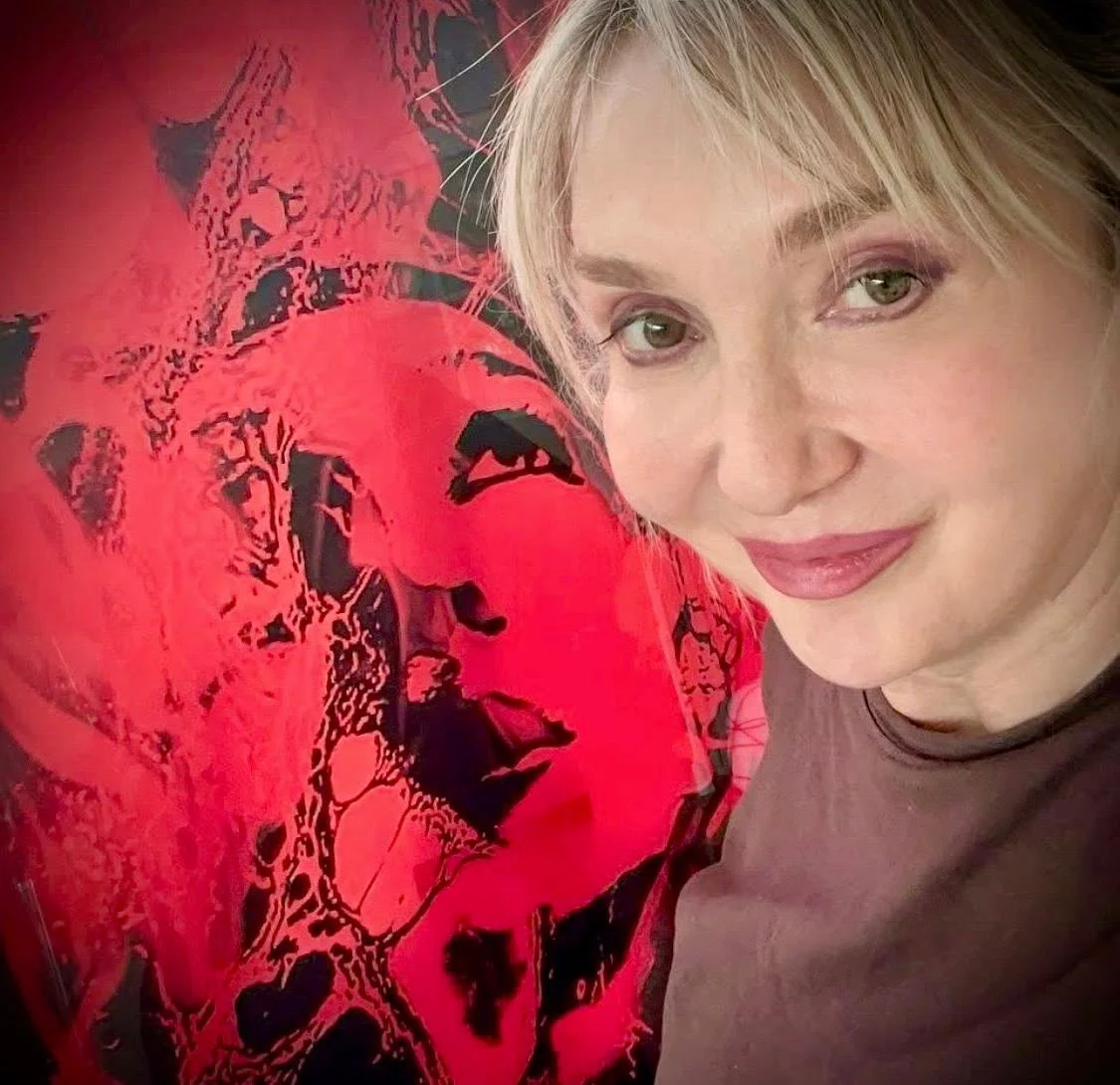
M. Kara (formerly Muberra Karamanoglu) is a contemporary artist working between New York and Ankara.
Her work moves between painting and textile, where the portrait becomes less about depicting a face and more about working through a surface. Instead of building clear images, she layers, interrupts, and sometimes obscures them.
She often uses burlap, thread, rope, and fabric, not as decorative elements, but as materials that push against the image. They cover, cut, and reshape what we see, creating a tension between what is visible and what is withheld.
The figures in her work are rarely fully present. They appear in fragments, as if caught between emerging and disappearing. For Kara, this is essential; identity is not something fixed, but something that is constantly shifting.
Her materials are connected to memory, but not in a nostalgic way. They carry a physical weight, turning the surface into a space where tension, resistance, and perception meet.
Artist Statement
My practice operates at the intersection of painting and material intervention. I approach the portrait not as a fixed image, but as a surface, one that can be disrupted, obscured, and physically reconfigured.
Rather than constructing cohesive representations, I work through processes of layering and interruption. Materials such as burlap, thread, rope, and pigment function as active elements within the work. They cut across the image, resist continuity, and shift the focus from depiction to material presence.
The face, which frequently appears in my work, is never fully resolved. It exists in a state of tension, between visibility and concealment, formation and fragmentation. This instability is not incidental; it reflects a condition where identity cannot be fully stabilized or contained within a single image.
My use of textile-based materials is informed by tactile memory, yet I do not treat these elements as nostalgic references. Instead, they are employed as structural forces that disrupt the pictorial field. Sewing, binding, and layering become acts that both construct and destabilize the image simultaneously.
I am interested in the limits of representation, where the image begins to break down and material presence takes over. In this space, the work no longer offers a complete or readable identity, but confronts the viewer with a surface that resists resolution.